Everything involving the sphere of loss --- that is, what I have lost of myself, the time that has gone; and disappearance, flight and the general evanescence of things, and even what in the prevalent and therefore most vulgar social sense of time is called wasted time – all this finds in that strangely apt old military term, lost children.
I was in Bangkok when I first heard of Iceberg Slim's autobiography "Pimp." While talking to a young english man about gender he mentioned pimp as being indicative of some of the dynamics between men and women. Eventually I picked up the book and read it quickly. Despite its heavy slang the book is easy to read and a page turner.
Published in 1969 the tale follows Iceberg Slim, a man so icy cold that he doesn't stir from his seat when bullets shoot through his hat, and his journey into becoming an infamous pimp in the 1920s and 1930s. The majority of the narrative centers around Slim's early days of pimping. From a young age he aspired to be a pimp and after a few bouts with the state via reformatory schools he acquired his first whore, who would later prove to be a hinderance to his life as a free man. He made his whore work 16 hour days and under the advice of a fellow pimp beat her with a wire hanger when she feigned sickness. The woman stayed with him much like someone involved in the cycle of abuse. The pimp has to secure the woman's continued employment by presenting some sort of end goal, that of a glorious future with the pimp.
Continual reference is made between the relationship between a whore and a pimp as being a reversal of the whore's game. A pimp is just a man who has reversed the dynamics on the whore. He demands payment for the whores work, just like a whore demands payment from a john for her work.
The book reminded me in many ways of Eugene Vidocq's "Memoir's of Vidocq" in which Vidocq is a thief and lives in the underbelly of society until he is "reformed" and becomes one of the pioneers of the modern detective skill set.
Like Vidocq, Slim preyed on those around him for the purpose of survival and like Vidocq, Slim is also reformed through the prison system. Reformed meaning that they no longer desire the precarious lifestyle afforded to them by being a thief and pimp respectivelly.
What is most apparent in both these books is the sense of adventure. Slim is continually on life's edge and is arrested several times. One of the most exciting parts for me in Slim's tale wasn't his countless conquests of women but in his successful prison escape.
While I can't condone Slim's predatory enterprise and bougerois spirit I do admire his adventurism and his life as an outsider of society. I hold a strong sympathy to those who toss the chains of society aside and attempting to living life according to one's own will, even if that life might not be particularly moral.
The alarm next to my bed went off. She rolled around in the blanketing. I got dressed putting on my warmest clothes. I put on my shoes and went outside. My friend was waiting in his car. The vehicle took us to West Oakland bart. The sky was still dark from the evening.
Our arrival at the bart station for the west coast coordinated port shut down was met with about 1,000 other early morning risers. I was hoping that the event would be short and sweet; some spectacular opposition with the police and a return to my bed within two hours.
En masse we marched down to the port and picketed next to three of the berths. Two of them had ships arriving that day and thus were important to blockade, while the third was an opening for workers. A row of riot cops stood in front of the picket. The picket circled around. My friend and I milled about.
Four hours later the port was announced closed for the day. I sighed with relief. My toes and fingers were cold. We walked back to the car and I went back to bed.
-
The discussion got started late. I drank a free beer and chatted with the people sitting around me while we waited for the presentation to begin. The book release party for "Communization and its Discontents," lasted three hours. The presenters rambled on about communization theory. The theory, coming from a post '68 left communist mileu asks us; "What does communism look like now that there is no longer a mass worker's movement, and how do we deal with the real subsumption of capital?
Theorie Communiste, one of the groups at the heart of communization theory, identify the decomposition of a mass worker's movement as the decline of programmatism. "In brief 'programmatism' is the forms of organization (mass parties, unions) and ideologies (socialism and syndicalism) that valorized workers' power... TC argue that with an intensification of 'real subsumption' - essentially the submergence of the entirety of society within a self-positing capitalism - in the 1970s the 'old' workers' movmement and proletariat become further imbricated within the reproduction of capitalism... the worker's movment carried within itself its antagonist in the shape of a reconstitution of capitalism in the very form its resistance takes - the valorization of the proletariat. (p.198)
In the contradictory struggle of capital against labor workers movements of the past have just helped to create a new dynamic capitalism. 'Old' mass workers' movements gains were merely reconsitutions of capital. The recuperation of revolt back into the arms of capital is made more poignant when we consider the real subsumption of capital.
Capital has moved beyond formal subsumption, its general form of domination, in which it "...subsumes an existing form of production 'as it finds it'. For example, peasants may still work in the fields in the way they always have but now they are compelled to take their goods to market to realise value. In this mode of subsumption, Marx argues, capital generates absolute surplus-value and can only do so by demanding extension to the workind day. So, surplus-value can only be genereated by fordcing work beyond the amount necessary for self-reproduction, although this compulsion does not tend to happen directly but through economic funcctions, i.e. you need to produce a surplus to generate income to live... This stands in contrast to real subsumption, in which capital revolutionizes the actual mode of labor to produce the specifically capitalist mode of production (p.11)"
Capital has made all labour ingrained to valorise itself for capital thus everything we look at is a thing and its price. The workers struggles of yesteryear are no longer viable attempts to overthrow capital. "That which distinguishes real subsumption, that is, this period in which capital has in a certain manner absorbed the totality of social reality rather than remaining restricted to the productive process, is that any activity is capable of becoming a part of the process of valorisation (p.73)."
Yet if there is no point in struggle against capital anymore why all the theory? Is it merely a hobby to pass the time for graduate students and communists who wish to explain their failings of the past? Endnotes puts its clearly when it states "This arrival of 'communization' at the forefront of radical chic probably means little in itself, but the major movement so far to find its voice in this language is more interesting, for the impasse of this movement is not merely a particular lack of programme or demands, but a symptom of the developing crisis in class relation... If communization is presenting itself currently, it is the palpable sense of an impasse in the dynamic of the class relation; this is an era in which the end of this relation looms perceptibly on the horizon, while capital runs into crisis at every turn and the working class is force to wage a struggle for which there is no plausible victory. (37-38)"
The revolutionary upheaval of France in May of '68 has had a profound impact on the pysche of the participants. That imprint has turned up in literature.
In my continuing reading of noir fiction I've recently come across Jean-Patrick Manchette. The frenchman, initially an active communist until reading Guy Debord's "Society of the Spectacle," was an author of noir novels in the late seventies and early eighties. Three of his novels; "The Prone Gunman," "Fatale," and "3 to Kill," have recently been published by San Francisco's City Light Books. Translated by Donald Nicholson-Smith, a former member of the English section of the Situationist Internationale, the novels take on the usual plotlines of the noir genre. In "The Prone Gunman," we have a hired assassin who returns to his home town to reclaim his highschool girlfriend wanting to settle down and get out of the business, but the company he works for is not obliging. "Fatale," follows the story of an opportunistic female killer as she enters a town and seeks to exploit the town's internal social contradictions in order to make money. In "3 to Kill," a bougerois middle manager worker aids a man after a failed assassination attempt. The bumbling killers come after the worker and in turn the hunted becomes the hunter.
What sets these novels apart is not only the characterizations but also the surprising endings. Unlike most noirs in which the protagonists' battles against a corrupt society come to naught giving only the character a bitter outlook, Manchette's protagonists' indivual rebellion come to nothing. Manchette points out the futility of individual rebellion against society in his excellent "Five Remarks on How I Earn My Living;"
"Less obviously and yet surely, the roman noir is characterized by the absence or weakness of the class struggle and its replacement by individual action (which is, incidentally, hopeless). While the bastards and the exploiters in fact hold social and political power, the others – the exploited , the masses of people – are no longer the subject of history, and in any case only appear in the roman noir in minor roles, more or less socially marginalized – taxi drivers, racial minorities (blacks, chicanos), vagabonds, the unemployed, déclassé intellectuals, servile personnel (but also, in surprising numbers, in the figure of workers, always especially mistreated before or during the novel’s action by the bosses, big shots and their strong-arm men)."
In "3 to Kill," Georges Gerfaut's 9our protagonist) life is thrown dramatically off course when on a holiday two hired killers attempt to take him down. He is able to throw off the attempted slaughter and leaves his family and the trappings of a comfortable but boring middle class life. He settles for nearly a year in a small town cabin, aided by an ex-military man who teaches him how to live in the "wild." The military man's daughter comes to visit and engages in a relationship with Gerfaut allured by his rejection of middle class life. Yet the killer's return and eventually Gerfaut is forced to hunt them down. When his mission is successful he claims amnesia and returns to his ordinary life. Manchette ends the novel with haunting emptiness "Once, in a dubious context, he lived through an exciting and bloody adventure; after which, all he could think of to do was to return to the fold. And now in the fold, he waits. If at this moment, without leaving the fold, Georges is racing around Paris at 145 kilometers per hour, this proves nothing beyond the fact that Georges is of his time. And of his space. (p.134)"
Despite breaking out of the "fold," Georges is unable to do anything but return. His continuing desire to live a life beyond the constraints of society is obvious in his recklessly fast driving (90 miles per hour) yet he is simply unable to leave this world behind. Unlike other noir protagonist senseless victories Gerfaut is given absolutely nothing. Other protagonists' are given a moral victory, Gerfaut is handed the continued feeling of existential emptiness of his time and of his space.
In Manchette's "The Prone Gunman," we see the continued theme of individual rebellion amounting to nothing. Martin Terrier, a hired killer, returns home to reclaim his high school girlfriend. The woman, an incorrugible alcoholic, is dumbstruck by his obtuse goal but goes off with him after her homelife is destroyed by killers looking to track down Terrier. The woman's alcohlic lifestyle, and her nymphomania are obvious signs of her dissatisfaction. Women given set options on how to behave and are also given equally restrained options in how to rebel. Terrier continues to doggedly pursue the woman despite the obvious failings of his narrow romantic dream. The woman ends up sleeping with one of the men from the assasination company Terrier desires to quit and Terrier goes mute. Unable to deal with the woman's sexual "betrayal," Terrier internal problems become externalized in typical male inability to express feeling. Terrier's hurt masculinity is the flip side of his love interests' disatisfied feminity. Eventually Terrier is shot in the head again, which allows him to speak again but at times he babbles. His inability to express his turmoil is no longer mediated by silence it is now communicated by senseless speech. In the end his Terrier's love interest leaves him and his "3 minute coitus," suddenly and without explaination. Terrier is reduced to a common worker's life, engaged as a waiter in a brasserie. Manchette leaves us on a more humorous note than in "3 to kill," with his ending referring to the love interest's leaving; "May we surmise that she is running around the world and leading a passionate and adventurous life? We may; it's no skin off our nose (p.153)." The pointlessness of the character's rebellions and actions still come to naught but in this case Manchette offers us a shrug and an absurdist laugh. Afterall Terrier's position is the same as it was in the beginning, prone, isn't there some humour in being postrate?
Have not yet embroidered with their pleasing designs
The banal canvas of our pitiable lives,
It is because our souls have not enough boldness.
Charles Baudelaire
To the Reader
Patricia Highsmith's "Strangers on a Train," is the anxiety ridden tale of two men, whose accidental meeting sends the reader on a ride of amorality. Whilst initially seeming a pillar of moral correctitude, lead character Guy Haines, has his principles eroded under the growing influence of antagonist Charles Bruno.
Bruno is continually drunk and takes to heart one of Charles Baudelaire's poems.
Be Drunk
Charles Baudelaire
You have to be always drunk. That's all there is to it—it's the only way. So as not to feel the horrible burden of time that breaks your back and bends you to the earth, you have to be continually drunk.
But on what? Wine, poetry or virtue, as you wish. But be drunk.
And if sometimes, on the steps of a palace or the green grass of a ditch, in the mournful solitude of your room, you wake again, drunkenness already diminishing or gone, ask the wind, the wave, the star, the bird, the clock, everything that is flying, everything that is groaning, everything that is rolling, everything that is singing, everything that is speaking. . .ask what time it is and wind, wave, star, bird, clock will answer you: "It is time to be drunk! So as not to be the martyred slaves of time, be drunk, be continually drunk! On wine, on poetry or on virtue as you wish."
This need for constant inebriation is written out in the early in the novel. "He (Bruno) remembered one brilliant and powerful thought that had come to him last night watching a televised shuffleboard game: the way to see the world was to see it drunk. Everything was created to be seen drunk (p.64)." By the end of the novel he is suffering violent physical ailments due to his consumption of the drink. It is worth noting as well that Haines begins to imbibe more regularly as well in the spirits as the story progresses paralleling his moral decline.
While alcohol and drunkeness are a part of the story far more important is the wavering sense of morality, a common problem in noir tales such as this.
Bruno initially meets Haines and conjures up a plot on murdering for each other. Bruno murders Haines' estranged wife and Haines after Bruno's insistence murders Bruno's father. After all "Any kind of person can murder. Purely circumstances and not a thing to do with temperament! People get so far-and it takes just the least little thing to push them over the brink. Anybody. Even your grandmother. I know," Bruno exclaimed to Haines on the train during their initial meeting. This first statement leads the way for the theme of the book, moral ambiguity.
Haines' decline of morality came with a loss of sense of self which had physical repercussions, "-collisions with revolving doors, his inability even to hold a pen against a ruler, and so often the feeling he wasn't here, doing what he was doing (p.183).
Haines loss of self coincides with his loss of traditional "Thou shalt" morality. Taught by his mother and father that all men were good, because all men had souls, and the soul was entirely good, Haines believed that evil came from externals. It was not he that was evil, but the world outside invading him. Yet morphed by murder he began to believe that: "...good and evil, lived side by side in the human heart, and not merely in differing proportions in one man and the next, but all good and all evil. One had merely to look for a little of either to find it all, one had merely to scratch the surface (p.180)"
Lacking moral guidelines Haines began to feel eternally guilty for the sins he committed. He actions are self justified when he lets go of his morality yet the sins are repulsive to his when he tries to regain them and fit back into normal life. These feelings are projected onto Bruno the coconspirator of sin. Haines is both drawn and repulsed by Bruno.
There is a blatant homosexual subtext underneath Bruno's and Haines' relationship. Bruno doesn't care much for women and Haines' feelings for Bruno are as complicated as his relationship to his morality.
"'This is my favorite. I never saw anything like this.' Bruno held up the white knitted tie with the thin red stripe down the center. "Started to get one for myself, but I wanted you to have it. Just you, I mean. They're for you, Guy."
"Thanks." Guy felt an unpleasant twitch in his upper lip. He might have been Bruno's lover, he thought suddently, to whom Bruno had brought a present, a peace offering (p.205)"
Highsmith,herself queer, was gay during a time in which homophobia intertwined with Cold War political anxiety which made homosexuality a security risk to the nation. It could be said that Highsmith's internalized homophobia was transcribed into characters, as neither of the lead characters are easy to empathize with. Queers are evil, and isn't it coincidental that the characters are queer for each other? This would be a shallow understanding not only of sexuality but also of the main underpinning of the novel which is sexual and moral ambiguity.
It would be easy to point out polarizing aspects of characters in the novel, and people outside the world of fiction, but as Otto Penzler, veteran editor and publisher of crime writing, said of Highsmith's fiction; "you don't know who are the good guys and the bad guys because there are no nice people."
My love for noir has continued with James Ellroy's "Brown's Requiem." Ellroy, whose most famous work is "LA Confidential (which was turned into an excellent movie)" tells the story of Fritz Brown a former LAPD officer who now works as a repo man in poor neighborhoods. His job as one of the bottom dwellers in the ghetto changes when he is hired by a golf caddie by the name of Fat Dog. The crazed caddie is misogynistic, racist, and deeply obsessed with his cello playing sister who lives with an older jewish man who pays the rent. Brown follows the sister around, and successfully sleeps with her. After dipping his wick in once he's in love (L-U-V) and goes out to try to thwart Fat Dog's maniac plans for his sister and the jewish benefactor. The story unfolds with soap opera style. Relationships aren't as clear as they might seem and lies beget lies which is typical par for the course in Ellroy's novels. The book was thankfully shorter than "LA Confidential" but didn't tell as much of a sweeping story. The writing is similiar as Ellroy's later works but is a bit more straightforward. An interesting quirk in Fitz Brown is his love of classical music which ties nicely into the most recent book I finished by James Cain, another author of the hard-boiled style. Cain is well known for noir classics; "The Postman Always Rings Twice" and "Double Indemity." Cain is not as well known for his proto-feminist novel "Mildred Pierce," which recently was turned into an HBO movie series.
While Cain is considered a hardboiled writer his novels are more dense and substative than the traditional mystery to which the style is associated. I finished "Three by Cain: Serenade, Love's Lovely Counterfeit, and The Butterfly," today. Of the three only "Love's Lovely Counterfeit" falls into the classical realm of noir fiction with its associations with crime, murder, femme fatales, and soulless men. As stated earlier Fitz Brown loves classical music as does the lead character of "Serenade" a wholly interesting tale of a former opera singer whose voiced cracked and so with no talent and luck ended up in Mexico. The washed up talent ends up falling in love with a mexican prostitute. He finds his ability again and regains status as a talented voice. With fame comes problems as his past life catches up to him, specifically in the form of a former male lover who pushed the protagonist too hard and made his voice/self crack. A battle of over the love and attention of the protagonist occurs between the female mexican prostitute and the well to do male lover. This tale was especially interesting as many noir tales tell little of homosexuals. Of course the homosexual was indighted as evil, but there were also obvious ways in which the antagonist was helpful for the protagonists life and on the flip side is the protagonists love affair with a mexican prostitute which is not exactly wholesome.
Cain continued to push the boundaries of what is wholesome in his tale "The Butterfly," which was originally published in 1946. This tale follows Jess, a god fearing man in the mining hills of Apalachia. Jess' grown daughter comes back home to live with him and he is seduced by her into making liquor, defending her honor, and eventually sleeping with her. It is revelead that he is not her father which only encourages him to bang her more. There's few tales that point at incestous lifestyles and pedepholia, perhaps Lolita being the only other that comes to mind and it was certainly interesting that Cain wrote the story considering Cain's other pieces but reading these "Three by Cain," continues to show me the breadth of Cain's work.
Lastly I've seen "Drive," a new release in theatres that follows Ryan Gosling as "The man with no name" who works as a stunt driver for movies in LA and moonlights as a getaway driver. Gosling falls for the girl next door and her son and when the girl's husband comes home he must do job that goes wrong in order to protect the family. Gosling goes on a knight's quest to protect the girl which is disgustingly noble and excitedly violent. The film is accompanied by an excellent synthpop score reminscent of Synth Britania and of course the entire film is a nod to JG Ballard.
Particularly enthralling is the slow cinematography that creates a constant feeling of transportation throughtout the movie. When a character is standing still there is still movement as if the character is always in motion, on a highway. It is probably the best movie I've seen this year. Certainly better than Harry Potter!!!
I've read the Harry Potter Series. The seven novel chronicle by British author J.K. Rowling is a pop cultural sensation. The narrative follows young Harry Potter, chosen through a series of accidents (and the courageous love his parents) to defeat the most vile of wizards, Lord Voldemort. Our hero/protagonist ages throughout the books and chronicles his enrollment in Hogwarts, a magical school where young wizards and witches learn to hone their abilities. With each passing year Potter uncovers more of the mystery of whom he is, why he was not killed when Voldemort sought to strike him down, and why he must strike down his nemesis. En route to his role as savior to the magical kingdom he is joined by Ron and Hermonine. Whilst Potter close allies, the figure of Dumbledore is more important. It is revealed in the latter books that Dumbledore has been staging the events of Potter's life to conclude with a deadly duel between the two opposing forces. Basically he set Potter up.
Potter's naive belief in Dumbledore, a man whom he barely knows, is ridiculous. Potter's trust in Dumbledore's plan is brought into question but ultimately shown to be true, another sad moral to tell children. Often children are told to trust in adults for tautological reasons, because they are adults, because they know better, because they have more experience... Yet adults like children make mistakes and should be as trusted with decisions as much as children. Adults are just as rash, nonsensical, and absurd as children. The only difference is that adults have more experience in rationalizing their decisions and covering their mistakes.
The series is additionally disappointing in its lack of violence. For an exceptionally evil wizard Voldemort doesn't murder many. He hardly engages in genocide. There are of course more "evil" things than homocide but Voldemort shys away from them. Evidently he's never read the Marquis De Sade nor Lautremont. Voldemort is hell bent on killing Potter (yawn... if I was the most powerful evil wizard ever I would be doing drugs, fucking, and eating babies) and attempting to sustain his immortality but really what good is living forever without sex, drugs, and baby eating?
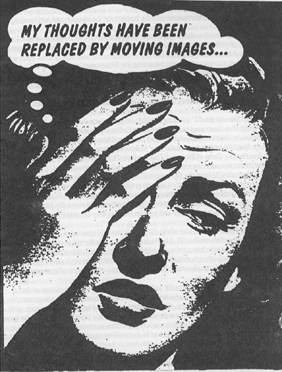
While reading the series my pictures of Potter and his crew were always formed by the actors in the movies. Having seen the movies before engaging the novels, the actors were scripted into my imagination. When Snape spoke I imagined Alan Rickman speaking and not some character of my own creation. The same was true for Potter (daniel radcliffe), hermonine (emma watson) and Ron(Rubert Grint). Jerry Mander speaks of this phenomenon in his excellent book "4 arguments against television." Mander not only makes social arguments for the destruction of television but also biological ones. Evidently it is a common occurence for people to replace imagination with things that they see on screen. Overall the novels are enjoyable to read. They are quick page turners that don't have much depth to them. Perhaps they will encourage people to read more... probably they will just encourage people to go see more movies.
I picked up a copy of Graham Greene's "The End of the Affair" in a small bookshop off of Khao San road. The shop had reasonably priced used books, roughly the same price one would pay in the states. One of the drawbacks of Thailand is the expense of books as most are imported, and there is a small used book market. That market also mainly contains crappy pulp espionage Tom Clancy style books and or romance as that's what people read while on vacation.
Greene returns to the theme of affairs in "The End of the Affair," which is a running thread in all the fiction that I've read by him. The story follows Maurice Bendrix, a slightly crippled writer who while working on a novel falls in love with a married woman, Sarah. Their love affair is troubled by Sarah's refusal to separate from her boring husband, Henry. Bendrix is a jealous lover and their relationship is plagued by his emotions. Set in World War II in London the climatic change in the novel comes about from a bombing. Sarah and Bendrix are at his home and Bendrix goes downstairs, a bomb hits. He is injured and temporarily trapped underneath a door. Sarah in a fit of panic prays to god to save Bendrix. Her lover is saved and as part of her prayer Sarah has promised never to see Bendrix again. Her devotion to god and her desire to keep her promise to the almighty sets the tone and subsequent dilemmas for the second half of the novel as Bendrix tries to reunite with her. The novel's ending is predictable but what is particularly irksome is the religious tract feel of the story. Instead of being a fictional tale about the sorrowful end of a relationship the novel turns into a polemic about belief in god. Several miraculous events unfold relating to Sarah and her faith which turns everyone into big old Jesus believers. Blech!
Reading about Greene makes me not surprised in the least about this latter turn, as authors' writing is influenced by their lives. Greene was a Roman Catholic himself and had an affair, in fact the book is dedicated to his mistress at the time.
Continuing on with the overally religious is Jeannett Winterson's "Oranges are not the only fruit," a book I shamelessly stole from one of my Thai roommates (sorry man I'll pay you back for it?). The novel is a bildsungsroman about a young girl whose mother is fanatically religious. The mother's social circle is confined to her church group who routinely chastise others for their sins. The mother is heavily influenced by missionary style beliefs and has a strong pentecostal background. The essential tension comes about because of the young girl's (and narrator) affair with another girl. Under the guise of being especially devout the two girls spend all their time together, eventually a relationship blooms. Unfortunately the lesbian flower of youth is crushed by the hammer of religion as the mother and her cronies find the passion of the two children intolerable. The two girls are torn apart, yet the cycle happens to the narrator again, and again as she become mores cognizant of her sexual desire for women.
The narrative is non-linear with several side tales told about a young woman and a wizard along with knights of the round table. Heavy on the religious symbolism the book is quite layered but what ultimately shines is the simple desire for a more diverse world in which people's desires can be accepted. The title of the book comes about because of the mother's insistence to feed her daughter oranges. The fruit is the only food available until the close of the book when the daughter has come of age and separated herself, to some extent, from the confines of her mother's religion. The mother comes to an uneasy acceptance of her daughters carnal passions by not mentioning them whilst still going out to save the world from sin.
"Oranges are not the only fruit," is Winterson's first novel, published at the age of 24 and like Greene's novel is at least semi-autobiographical. Winterson grew up in a penecostal family. A devout child, Winterson began to deliver sermons and proselytize by the age of six. Ten years down the road she realized that she was a lesbian and left home which mirrors the narrative of the novel. We write about what we know, and we only know what we live.
Winterson includes a handful of poetic and interesting lines that I liked which are included below:
"I have a theory that every time you make an important choice, the part of you left behind continues the other life you could have had. Some people's emanations are very strong, some people create themselves afresh outside of their own body. (p. 164)"
"Time is a great deadener; people forget, get bored, grow old, go away. She said that not much had happened between us anyways, historically speaking. But history is a string full of knots, the best you can do is admire it, and maybe knot it up a bit more. History is a hammock for swinging and a game for playing. A cat's cradle (p. 166)."
"There's no choice that doesn't mean a loss (p.167)."
The jeep was packed as it shuttled us to the disco in Kanchanaburi. "I don't understand you Americans," she said, her indian accent making her statement resonate in the vehicle. "We have to vie for supremacy. If there is more than one American in the room we fight each other for who can be the real representative of our grandious nation," I replied. "Fuck, I would be a better representative for America than you," the australian replied. "She would too and she's from south east asia." "Shut the fuck up before I bomb your country. I'll bomb all your stupid countries. Pricks," I replied.
Graham Greene's "The Quiet American," begins with the death of an American. Greene through his narrator, Thomas Fowler, a British jaded journalist reaching his 50s with a paunch to match, describes the character of the American and how he ended up being... Marrrdeerrred. The american, Pyle, is an idealist who has taken hold of the writings of York Harding, some sort of democratic ideologue who has spent little time in Vietnam where the novel is set. Fowler lives with his lover, a young vietnamese woman named Phuong covering the French war when Pyle arrives on scene. Fowler is realistic about the battle between the nations and uninvolved. Pyle however, being the young idealist that he is, believes in neither the colonialist answer of the French nor in the communism of the asian country he is rather beguiled by the idea of a "third force," which when operational would be more easily maneuvered by the U.S.
While ideologically different, the two also battle over the love/company of Phuong. The 20 year old woman's character is never fleshed out with her decisions being made by her older sister whom is primarily interested in her being married off. She is depicted by Fowler as a woman who seeks security, while Pyle believes that she is a beautiful flower in need of saving. Phuong, herself, speaks little and when she does it is only to ask if Fowler would like his opium pipe filled, or to recount her trip to the movies.
The basic narrative structure reminded me of Greene's other work that I've read recently; "May I borrow your Husband?" In the short story the narrator, who again is a writer, is holidaying by the Mediterranean sea. The hotel he is staying is visited upon initially by a gay couple, and then a newly wed couple. The gay couple swoop on the groom. While the narrator is smitten with the bride, Poopy, he never mobilizes his feelings for her and she remains in innocent oblivion of the sexual change that is occurring in her husband. Where the stories are similar is in the taking of a partner. In "May I borrow your Husband," it is the groom whom is being taken by a gay couple, whereas in the "Quiet American," it is the exotic Phuong being stolen by the idealistic American.
The novel has twice been made into a movie, once with Michael Caine, in 2002 and initially in 1958. The writing is easy with Greene's literary style being simplistic and sparse. The action is steady and its easy to empathize with Fowler and see Pyle as being a delusional twat.
Being overseas I've encountered a slew of internationals, and other ex pats. I've met more Swedes than the small country would seem to have yet few Americans, it seems like we don't travel that much. It is always interesting hearing what others think of my noble nation of birth. It makes me wonder if there is something essential, some inherent qualities or traits of Americans.
Evidently the book recieved good press in Britain but Americans didn't much like it considering its poor depiction of them. Maybe the British were right...?