Thursday, September 22, 2011

The black, The white


My love for noir has continued with James Ellroy's "Brown's Requiem." Ellroy, whose most famous work is "LA Confidential (which was turned into an excellent movie)" tells the story of Fritz Brown a former LAPD officer who now works as a repo man in poor neighborhoods. His job as one of the bottom dwellers in the ghetto changes when he is hired by a golf caddie by the name of Fat Dog. The crazed caddie is misogynistic, racist, and deeply obsessed with his cello playing sister who lives with an older jewish man who pays the rent. Brown follows the sister around, and successfully sleeps with her. After dipping his wick in once he's in love (L-U-V) and goes out to try to thwart Fat Dog's maniac plans for his sister and the jewish benefactor. The story unfolds with soap opera style. Relationships aren't as clear as they might seem and lies beget lies which is typical par for the course in Ellroy's novels. The book was thankfully shorter than "LA Confidential" but didn't tell as much of a sweeping story. The writing is similiar as Ellroy's later works but is a bit more straightforward. An interesting quirk in Fitz Brown is his love of classical music which ties nicely into the most recent book I finished by James Cain, another author of the hard-boiled style. Cain is well known for noir classics; "The Postman Always Rings Twice" and "Double Indemity." Cain is not as well known for his proto-feminist novel "Mildred Pierce," which recently was turned into an HBO movie series.


While Cain is considered a hardboiled writer his novels are more dense and substative than the traditional mystery to which the style is associated. I finished "Three by Cain: Serenade, Love's Lovely Counterfeit, and The Butterfly," today. Of the three only "Love's Lovely Counterfeit" falls into the classical realm of noir fiction with its associations with crime, murder, femme fatales, and soulless men. As stated earlier Fitz Brown loves classical music as does the lead character of "Serenade" a wholly interesting tale of a former opera singer whose voiced cracked and so with no talent and luck ended up in Mexico. The washed up talent ends up falling in love with a mexican prostitute. He finds his ability again and regains status as a talented voice. With fame comes problems as his past life catches up to him, specifically in the form of a former male lover who pushed the protagonist too hard and made his voice/self crack. A battle of over the love and attention of the protagonist occurs between the female mexican prostitute and the well to do male lover. This tale was especially interesting as many noir tales tell little of homosexuals. Of course the homosexual was indighted as evil, but there were also obvious ways in which the antagonist was helpful for the protagonists life and on the flip side is the protagonists love affair with a mexican prostitute which is not exactly wholesome.

Cain continued to push the boundaries of what is wholesome in his tale "The Butterfly," which was originally published in 1946. This tale follows Jess, a god fearing man in the mining hills of Apalachia. Jess' grown daughter comes back home to live with him and he is seduced by her into making liquor, defending her honor, and eventually sleeping with her. It is revelead that he is not her father which only encourages him to bang her more. There's few tales that point at incestous lifestyles and pedepholia, perhaps Lolita being the only other that comes to mind and it was certainly interesting that Cain wrote the story considering Cain's other pieces but reading these "Three by Cain," continues to show me the breadth of Cain's work.

Lastly I've seen "Drive," a new release in theatres that follows Ryan Gosling as "The man with no name" who works as a stunt driver for movies in LA and moonlights as a getaway driver. Gosling falls for the girl next door and her son and when the girl's husband comes home he must do job that goes wrong in order to protect the family. Gosling goes on a knight's quest to protect the girl which is disgustingly noble and excitedly violent. The film is accompanied by an excellent synthpop score reminscent of Synth Britania and of course the entire film is a nod to JG Ballard.


Particularly enthralling is the slow cinematography that creates a constant feeling of transportation throughtout the movie. When a character is standing still there is still movement as if the character is always in motion, on a highway. It is probably the best movie I've seen this year. Certainly better than Harry Potter!!!

Saturday, September 10, 2011

A Muggle's guide to reading


I've read the Harry Potter Series. The seven novel chronicle by British author J.K. Rowling is a pop cultural sensation. The narrative follows young Harry Potter, chosen through a series of accidents (and the courageous love his parents) to defeat the most vile of wizards, Lord Voldemort. Our hero/protagonist ages throughout the books and chronicles his enrollment in Hogwarts, a magical school where young wizards and witches learn to hone their abilities. With each passing year Potter uncovers more of the mystery of whom he is, why he was not killed when Voldemort sought to strike him down, and why he must strike down his nemesis. En route to his role as savior to the magical kingdom he is joined by Ron and Hermonine. Whilst Potter close allies, the figure of Dumbledore is more important. It is revealed in the latter books that Dumbledore has been staging the events of Potter's life to conclude with a deadly duel between the two opposing forces. Basically he set Potter up.


Potter's naive belief in Dumbledore, a man whom he barely knows, is ridiculous. Potter's trust in Dumbledore's plan is brought into question but ultimately shown to be true, another sad moral to tell children. Often children are told to trust in adults for tautological reasons, because they are adults, because they know better, because they have more experience... Yet adults like children make mistakes and should be as trusted with decisions as much as children. Adults are just as rash, nonsensical, and absurd as children. The only difference is that adults have more experience in rationalizing their decisions and covering their mistakes.

The series is additionally disappointing in its lack of violence. For an exceptionally evil wizard Voldemort doesn't murder many. He hardly engages in genocide. There are of course more "evil" things than homocide but Voldemort shys away from them. Evidently he's never read the Marquis De Sade nor Lautremont. Voldemort is hell bent on killing Potter (yawn... if I was the most powerful evil wizard ever I would be doing drugs, fucking, and eating babies) and attempting to sustain his immortality but really what good is living forever without sex, drugs, and baby eating?

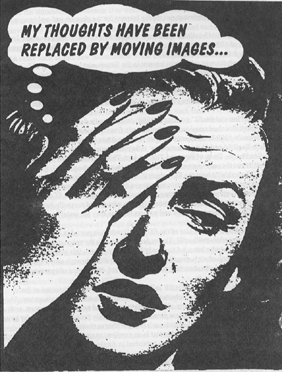
While reading the series my pictures of Potter and his crew were always formed by the actors in the movies. Having seen the movies before engaging the novels, the actors were scripted into my imagination. When Snape spoke I imagined Alan Rickman speaking and not some character of my own creation. The same was true for Potter (daniel radcliffe), hermonine (emma watson) and Ron(Rubert Grint). Jerry Mander speaks of this phenomenon in his excellent book "4 arguments against television." Mander not only makes social arguments for the destruction of television but also biological ones. Evidently it is a common occurence for people to replace imagination with things that they see on screen.
Overall the novels are enjoyable to read. They are quick page turners that don't have much depth to them. Perhaps they will encourage people to read more... probably they will just encourage people to go see more movies.

Friday, July 29, 2011

The Century of Self

Adam Curtis in his extraordinary documentary "The Century of Self," follows the Freud family and the rise of advanced capitalism. Divided into four parts the film series is a geneology of the Self in the western world.The Freudian view of human beings maintained that humans are irrational beings driven by unconscious libidinous desires. Edward Bernays, Freud's nephew and creator of public relations, believed that because humans had dangerous uncontrollable desires they must be controlled and managed from above.

"The conscious and intelligent manipulation of the organized habits and opinions of the masses is an important element in democratic society. Those who manipulate this unseen mechanism of society constitute an invisible government which is the true ruling power of our country. ...We are governed, our minds are molded, our tastes formed, our ideas suggested, largely by men we have never heard of. This is a logical result of the way in which our democratic society is organized. Vast numbers of human beings must cooperate in this manner if they are to live together as a smoothly functioning society. ...In almost every act of our daily lives, whether in the sphere of politics or business, in our social conduct or our ethical thinking, we are dominated by the relatively small number of persons...who understand the mental processes and social patterns of the masses. It is they who pull the wires which control the public mind." Bernays Propaganda 1928

During the radicalism of the 1960s and 1970s this view of the person whose consumption habits were to be controlled came into question. The left did capitalism a favor by opening its doors to the importance of individual choice as a means of self expression. According to Wilhelm Reich, a liberatory Freudian pyschoanalyst, the self's desires should not be suppressed but rather should continually be let loose. The inner unconscious desires and motives should be expressed. Capitalism adapted to this new view and began to market products as expressions of individual taste and desires. No longer was a commodity just a fulfillment of a desire but it was also a way to express desire.

I feel like the strength of this documentary series is in two things. First in showing the adaptability of modern capitalism to incorporate changing views of the self. Ostensibly the documentary is a depiction of the rise of Spectacular capitalism. The second strength is in showing how the self has changed with time. This change implies that our senses of self are not static, essential things but rather adapt with changes in social structure and events in our own personal lives.

Part 1


Part 2


Part 3


Part 4

Wednesday, July 20, 2011

Friday, July 15, 2011

Metamorphsis on Stage


"As Gregor Samsa awoke one morning from uneasy dreams he found himself transformed in his bed into a gigantic insect-like creature. He was laying on his hard, as it were armor-plated, back and when he lifted his head a little he could see his domelike brown belly divided into stiff arched segments on top of which the bed quilt could hardly keep in position and was about to slide off completely. His numerous legs, which were pitifully thin compared to the rest of his bulk, waved helplessly before his eyes." The Metamorphis by Franz Kafka


Aurora Theatre, the location for Metamorphis by Franz Kafka and adapted by David Farr and Gisli Orn Gardarsson, was small and intimate. The theatre fit a hundred filled seats. The set was simple; a living room with two chairs and a television, a kitchen with a table, a set of stairs with a framed door and the protagonist, Gregor Samsa's bedroom. His bedroom was a simple affair with a bed and a framed window however the room was slanted downward toward the living room. The angle of the room forced Samsa in his motions through the room to crawl, beast like through the area.

Alexander Crowther, who played Gregor, was made not into a insect which is implied by many translators of the novella, but is rather given a general unwholesome and despicable character. This characterization is closer to the German Ungeziefer which literally means "unclean animal not suitable for sacrifice" and is sometimes used colloquially to mean "bug." Kafka in the novella defines Samsa as an Ungeziefer. Crowther does a splendid job as a green lit beast crawling about the set with darkened eyes. With little costuming he conveys bodily the disgust that Kafka intended.

The play is set in America during the 1950s, an era of witch hunts, paranoia, and sci-fi flicks such as Them! The Samsa family is given a heavy schelack of "normality" which is shattered when their chief breadwinner, Gregor, is unable to work, he is a disgusting beast instead of a good worker. The family is forced to take on a renter, and the father employment. While the economics of the ordeal with Gregor is brings the plot along the interpersonal relationships within the family is where the core of action resides. The cast shows their acting chops with attempts to continue on as normal whilst having a blemish in their lives. Particularly riveting is Madeline H.D. Brown's skill in portraying Gregor's mother. Brown face shows the strain of smiling under duress. Her features portray the tender line between facing things with a smile and cracking under the pressure.

What was particularly interesting about this adaptation was its humor. The novella is an absurd story and this existential absurdity is translated on stage as comedy. There was something poignantly funny when the Samsa family dealt with their new found filth. I'm not sure that it was Kafka's intention for his story to be one of humour and laughter but there is something absurdly comical about a man who wakes one day to find himself a Ungeziefer.


Thursday, July 7, 2011

Wednesday, July 6, 2011

The harder they fall

He washed his glass and wiped it clean, to destroy the evidence, and looked at me steadily. "Mr. Lewis, what is it that turned a fine sport into a dirty business?"
"Money," I said.
"It's money," he went on, as if he hadn't heard me. "Money. Too much money for the promoters, too much money for the managers, too much money for the fighters."
"Too much money for everybody except the press agents," I said. I was feeling sorrier for myself at the moment than I was for the game. That's what the battle always did to me.
"I tell you, Mr. Lewis, it's money," Charles was saying.
"An athletic sport in an atmosphere of money is like a girl from a good family in a house of ill fame." p.7 The Harder They Fall

Budd Schulberg was not only a novelist but a screenplay writer who in his most famous title depicts the scandal and corruption of the boxing world. The story follows Eddie Willis a writer and press agent whose moral compass goes askew when he begins to work for Nick Belinzo, a boxing promoter. Belinzo contracts the behemoth peasant Toro Molina to become a fighter and spectacle for him. Toro is unaware of the complexities and business of boxing. Trusting his newfound friends Toro is led along on a string through a series of created victories. Each fight is made more spectacular and Toro is promised more money and all that he desires. In time with the spectacle is the diminishing of Toro's control over his life. Toro is eventually given a pittance of a payment for his work while the others, the promoters and fat cats get rich. Having no other line of recourse Toro is damned to continue to sell himself to fight.


While the action centers on Toro the realization of the grasp of capital depresses Eddie and makes him feel like a beaten fighter. In this way the novel is a classic noir. The main character is aware of fate and the social structures that create his fate but is totally unable to do anything about it no matter his valiant efforts.