Wednesday, July 20, 2011


Friday, July 15, 2011
Metamorphsis on Stage

"As Gregor Samsa awoke one morning from uneasy dreams he found himself transformed in his bed into a gigantic insect-like creature. He was laying on his hard, as it were armor-plated, back and when he lifted his head a little he could see his domelike brown belly divided into stiff arched segments on top of which the bed quilt could hardly keep in position and was about to slide off completely. His numerous legs, which were pitifully thin compared to the rest of his bulk, waved helplessly before his eyes." The Metamorphis by Franz Kafka
Aurora Theatre, the location for Metamorphis by Franz Kafka and adapted by David Farr and Gisli Orn Gardarsson, was small and intimate. The theatre fit a hundred filled seats. The set was simple; a living room with two chairs and a television, a kitchen with a table, a set of stairs with a framed door and the protagonist, Gregor Samsa's bedroom. His bedroom was a simple affair with a bed and a framed window however the room was slanted downward toward the living room. The angle of the room forced Samsa in his motions through the room to crawl, beast like through the area.

Alexander Crowther, who played Gregor, was made not into a insect which is implied by many translators of the novella, but is rather given a general unwholesome and despicable character. This characterization is closer to the German Ungeziefer which literally means "unclean animal not suitable for sacrifice" and is sometimes used colloquially to mean "bug." Kafka in the novella defines Samsa as an Ungeziefer. Crowther does a splendid job as a green lit beast crawling about the set with darkened eyes. With little costuming he conveys bodily the disgust that Kafka intended.
The play is set in America during the 1950s, an era of witch hunts, paranoia, and sci-fi flicks such as Them! The Samsa family is given a heavy schelack of "normality" which is shattered when their chief breadwinner, Gregor, is unable to work, he is a disgusting beast instead of a good worker. The family is forced to take on a renter, and the father employment. While the economics of the ordeal with Gregor is brings the plot along the interpersonal relationships within the family is where the core of action resides. The cast shows their acting chops with attempts to continue on as normal whilst having a blemish in their lives. Particularly riveting is Madeline H.D. Brown's skill in portraying Gregor's mother. Brown face shows the strain of smiling under duress. Her features portray the tender line between facing things with a smile and cracking under the pressure.
What was particularly interesting about this adaptation was its humor. The novella is an absurd story and this existential absurdity is translated on stage as comedy. There was something poignantly funny when the Samsa family dealt with their new found filth. I'm not sure that it was Kafka's intention for his story to be one of humour and laughter but there is something absurdly comical about a man who wakes one day to find himself a Ungeziefer.
Thursday, July 7, 2011
Wednesday, July 6, 2011
The harder they fall
He washed his glass and wiped it clean, to destroy the evidence, and looked at me steadily. "Mr. Lewis, what is it that turned a fine sport into a dirty business?"
"Money," I said.
"It's money," he went on, as if he hadn't heard me. "Money. Too much money for the promoters, too much money for the managers, too much money for the fighters."
"Too much money for everybody except the press agents," I said. I was feeling sorrier for myself at the moment than I was for the game. That's what the battle always did to me.
"I tell you, Mr. Lewis, it's money," Charles was saying.
"An athletic sport in an atmosphere of money is like a girl from a good family in a house of ill fame." p.7 The Harder They Fall
Budd Schulberg was not only a novelist but a screenplay writer who in his most famous title depicts the scandal and corruption of the boxing world. The story follows Eddie Willis a writer and press agent whose moral compass goes askew when he begins to work for Nick Belinzo, a boxing promoter. Belinzo contracts the behemoth peasant Toro Molina to become a fighter and spectacle for him. Toro is unaware of the complexities and business of boxing. Trusting his newfound friends Toro is led along on a string through a series of created victories. Each fight is made more spectacular and Toro is promised more money and all that he desires. In time with the spectacle is the diminishing of Toro's control over his life. Toro is eventually given a pittance of a payment for his work while the others, the promoters and fat cats get rich. Having no other line of recourse Toro is damned to continue to sell himself to fight.
While the action centers on Toro the realization of the grasp of capital depresses Eddie and makes him feel like a beaten fighter. In this way the novel is a classic noir. The main character is aware of fate and the social structures that create his fate but is totally unable to do anything about it no matter his valiant efforts.
"Money," I said.
"It's money," he went on, as if he hadn't heard me. "Money. Too much money for the promoters, too much money for the managers, too much money for the fighters."
"Too much money for everybody except the press agents," I said. I was feeling sorrier for myself at the moment than I was for the game. That's what the battle always did to me.
"I tell you, Mr. Lewis, it's money," Charles was saying.
"An athletic sport in an atmosphere of money is like a girl from a good family in a house of ill fame." p.7 The Harder They Fall
Budd Schulberg was not only a novelist but a screenplay writer who in his most famous title depicts the scandal and corruption of the boxing world. The story follows Eddie Willis a writer and press agent whose moral compass goes askew when he begins to work for Nick Belinzo, a boxing promoter. Belinzo contracts the behemoth peasant Toro Molina to become a fighter and spectacle for him. Toro is unaware of the complexities and business of boxing. Trusting his newfound friends Toro is led along on a string through a series of created victories. Each fight is made more spectacular and Toro is promised more money and all that he desires. In time with the spectacle is the diminishing of Toro's control over his life.
Toro is eventually given a pittance of a payment for his work while the others, the promoters and fat cats get rich. Having no other line of recourse Toro is damned to continue to sell himself to fight.While the action centers on Toro the realization of the grasp of capital depresses Eddie and makes him feel like a beaten fighter. In this way the novel is a classic noir. The main character is aware of fate and the social structures that create his fate but is totally unable to do anything about it no matter his valiant efforts.
Monday, June 27, 2011
Saturday, June 25, 2011
Celebrity
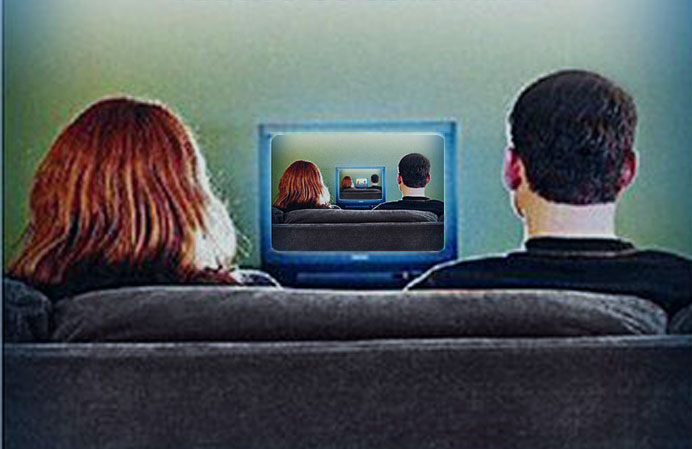
The celebrity, the spectacular representation of a living human being, embodies this banality by embodying the image of a possible role. Being a star means specializing in the seemingly lived; the star is the object of identification with the shallow seeming life that has to compensate for the fragmented productive specializations which are actually lived. Celebrities exist to act out various styles of living and viewing society unfettered, free to express themselves globally. They embody the inaccessible result of social labor by dramatizing its by-products magically projected above it as its goal: power and vacations, decision and consumption, which are the beginning and end of an undiscussed process.
Society of the Spectacle 60
The gym was warm from the San Francisco heat. Summer solistice had just passed and the weather was finally turning. Neungsiam was doing padwork in the ring while my camera snapped pictures. The 36 year old Thai man will be fighting next month in Ponoma California. I was at his place to help him spar, and to possibly interview him.
"Hey, I like your writing a lot," David said to me. I turned toward him. He looked vaguely familiar, later I would recognize his portrait on a fight poster for a couple of years ago. "I totally live through you reading your stuff while I'm at my job."
"There's nothing quite like mediated living," I said in reply.
He looked at me quizzically and a friend nearby smiled.
This is one of the disheartening effects of writing and being public about my trips to Thailand via mymuaythai. People read the highlights of my "adventures" and don't realize that I live an everyday life that is quite normal. Put on stage my exploits are read as a life lived unfettered by social norms, a life of permanent vacation, the complete opposite of socially necessitated labor time/work. Just like happy hours and weekends my advertisements of a life fully lived ends up being escapism. Free time is the time away from work in which we are supposed to regain ourselves and replenish. Labour is a magical commodity in that it can be replenished unlike other items such as coal, meat, or toilet paper. There is a limited supply of the latter, (although I hope that toilet paper doesn't run out anytime soon) because the earth has limited resources. Yet in our free time we reinforce spectacular society. In the above case I am inadvertently reinforcing this idealistic notion of a life truly lived yet as long as there is capital there can only be choices made by and for economics.
--
Society of the Spectacle 60
The gym was warm from the San Francisco heat. Summer solistice had just passed and the weather was finally turning. Neungsiam was doing padwork in the ring while my camera snapped pictures. The 36 year old Thai man will be fighting next month in Ponoma California. I was at his place to help him spar, and to possibly interview him.
"Hey, I like your writing a lot," David said to me. I turned toward him. He looked vaguely familiar, later I would recognize his portrait on a fight poster for a couple of years ago. "I totally live through you reading your stuff while I'm at my job."
"There's nothing quite like mediated living," I said in reply.
He looked at me quizzically and a friend nearby smiled.
This is one of the disheartening effects of writing and being public about my trips to Thailand via mymuaythai. People read the highlights of my "adventures" and don't realize that I live an everyday life that is quite normal. Put on stage my exploits are read as a life lived unfettered by social norms, a life of permanent vacation, the complete opposite of socially necessitated labor time/work. Just like happy hours and weekends my advertisements of a life fully lived ends up being escapism. Free time is the time away from work in which we are supposed to regain ourselves and replenish. Labour is a magical commodity in that it can be replenished unlike other items such as coal, meat, or toilet paper. There is a limited supply of the latter, (although I hope that toilet paper doesn't run out anytime soon) because the earth has limited resources. Yet in our free time we reinforce spectacular society. In the above case I am inadvertently reinforcing this idealistic notion of a life truly lived yet as long as there is capital there can only be choices made by and for economics.

--
Friday, June 10, 2011
Hair cut
The blue sky had just a few clouds. The slight chilled summer breeze blew all the white whisps away. I rode my bike to 40th and Telegraph. The chain on my bike cranked along eeking out a harsh squeak. The chain was rusted and old. My bike was dented and scraped but still retained a blue sky color.
I locked my bike to a bike stand and walked inside the barbershop. Outside a striped pole twirled denoting the nature of the business. Four barber chairs were set up on the north wall. One of them was occupied. An early thirties african american man cut the hair of another's with a clipper.
I took off my bag and set it down on a row of chairs for waiting clients on the south wall.
"You need a hair cut," said a barber. His occuppation was denoted by his black smock. He motioned me to take a seat. "What do you want," he asked.
"Cut down the sides to about one and then a little off the top. I have this weird patch of hair on the top of my head from getting stitches last month and I want it to look better. I don't care what you do to it," I told him.
When the hair on the side of my hair is trimmed short you can see the lightning bolt scars from my facial reconstruction. I liked to be able to see them, they are reminders. The lines recall my fight and the surgery afterwards. Are lives are composed of scars, layers upon layers of hardened flesh. Peeling back the topmost slab of skin reveals another and another.
The barber began to cut my hair. The clipper buzzed. Attached to the western wall was a flat screen plasma television. It was showing "Die Hard 4." Bruce Willis was once again trying to save america from certain doom.
"Yo Aaron, you seen that movie yet," the other barber said.
"Nah, I'm supposed to see it with my boy later tonight," Aaron said as he cut my hair.
The barber and I saw in silence except for the ever present noise of the clippers. I thought of chatting with him but my tongue was thick.
"Look good," Aaron asked me. I looked at my reflection. The lightning bolts were there so was the new pink scar that ran down my forehead and into my hairline parting my hair like a cowlick. I blinked at my reflection and nodded.
"How much," I asked.
"Twenty dollars," he said pointing at a sign on the wall.
I gave him a bill and a few dollars as a tip. I ran my fingers through my short hair. I felt the ridge that runs just behind my hairline. I rubbed the ridge and wondered if it would ever disappear.
The sky was still blue. The clouds were still sparse. I unlocked my bicycle. The chain still squeaked slightly. I rode home, my hair cleaner and my scars a little more visible for a while.
I locked my bike to a bike stand and walked inside the barbershop. Outside a striped pole twirled denoting the nature of the business. Four barber chairs were set up on the north wall. One of them was occupied. An early thirties african american man cut the hair of another's with a clipper.
I took off my bag and set it down on a row of chairs for waiting clients on the south wall.
"You need a hair cut," said a barber. His occuppation was denoted by his black smock. He motioned me to take a seat. "What do you want," he asked.
"Cut down the sides to about one and then a little off the top. I have this weird patch of hair on the top of my head from getting stitches last month and I want it to look better. I don't care what you do to it," I told him.
When the hair on the side of my hair is trimmed short you can see the lightning bolt scars from my facial reconstruction. I liked to be able to see them, they are reminders. The lines recall my fight and the surgery afterwards. Are lives are composed of scars, layers upon layers of hardened flesh. Peeling back the topmost slab of skin reveals another and another.
The barber began to cut my hair. The clipper buzzed. Attached to the western wall was a flat screen plasma television. It was showing "Die Hard 4." Bruce Willis was once again trying to save america from certain doom.
"Yo Aaron, you seen that movie yet," the other barber said.
"Nah, I'm supposed to see it with my boy later tonight," Aaron said as he cut my hair.
The barber and I saw in silence except for the ever present noise of the clippers. I thought of chatting with him but my tongue was thick.
"Look good," Aaron asked me. I looked at my reflection. The lightning bolts were there so was the new pink scar that ran down my forehead and into my hairline parting my hair like a cowlick. I blinked at my reflection and nodded.
"How much," I asked.
"Twenty dollars," he said pointing at a sign on the wall.
I gave him a bill and a few dollars as a tip. I ran my fingers through my short hair. I felt the ridge that runs just behind my hairline. I rubbed the ridge and wondered if it would ever disappear.
The sky was still blue. The clouds were still sparse. I unlocked my bicycle. The chain still squeaked slightly. I rode home, my hair cleaner and my scars a little more visible for a while.
Subscribe to:
Posts (Atom)
